
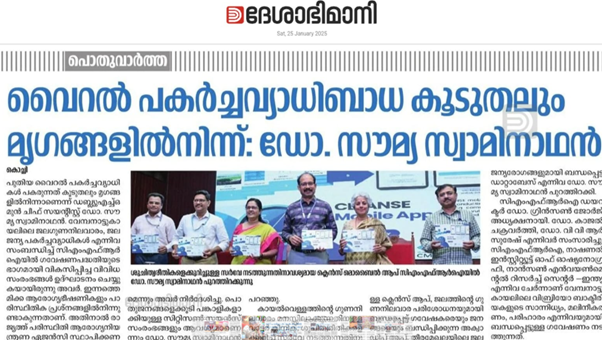
We are pleased that research from the WADIM (Water-Associated Infectious Diseases in India: Digital Management Tools) project has been featured in two leading national newspapers, including The Hindu and Madymam, highlighting Vembanad Lake as a major hotspot for leptospirosis, a zoonotic disease that continues to claim many lives in Kerala each year.
The study, titled “Impact of Extreme Weather Events and Land Use on Leptospira Distribution in Vembanad Lake and Associated Disease Outbreaks in Near Shore Areas,” was recently published in the journal Water, Air & Soil Pollution (Springer Nature). The findings reveal that almost half of reported leptospirosis cases in the last decade occurred during the monsoon season from June to September, when rainfall and flooding increase human contact with contaminated water.
During the 2018 Kerala floods, the infection rate surged dramatically, with 641 infections per 100,000 exposures and nearly 40% of that year’s cases reported in September alone. The number of cases in the Vembanad region was nearly seven times higher in September than in August, underscoring the strong link between extreme weather events and disease outbreaks.
The study also shows that Leptospira bacteria persist in the lake year-round, with environmental factors such as tidal flooding and land-use changes increasing exposure risk. The researchers emphasise the need for molecular surveillance of coastal waters and improved urban planning that integrates floodwater management, rodent control, and wastewater treatment.
By combining environmental monitoring, digital mapping, and community engagement, WADIM is working to strengthen a One Health approach – linking environmental, animal, and human health – to reduce the burden of water-associated diseases in India.
This national recognition highlights the impact of WADIM’s collaborative research and the importance of understanding how climate, land use, and extreme weather shape disease risks in vulnerable coastal regions.
Read the newspaper article here > https://www.madhyamam.com/health/news/study-suggests-vembanad-lake-is-becoming-an-epicenter-of-leptospirosis-1454167